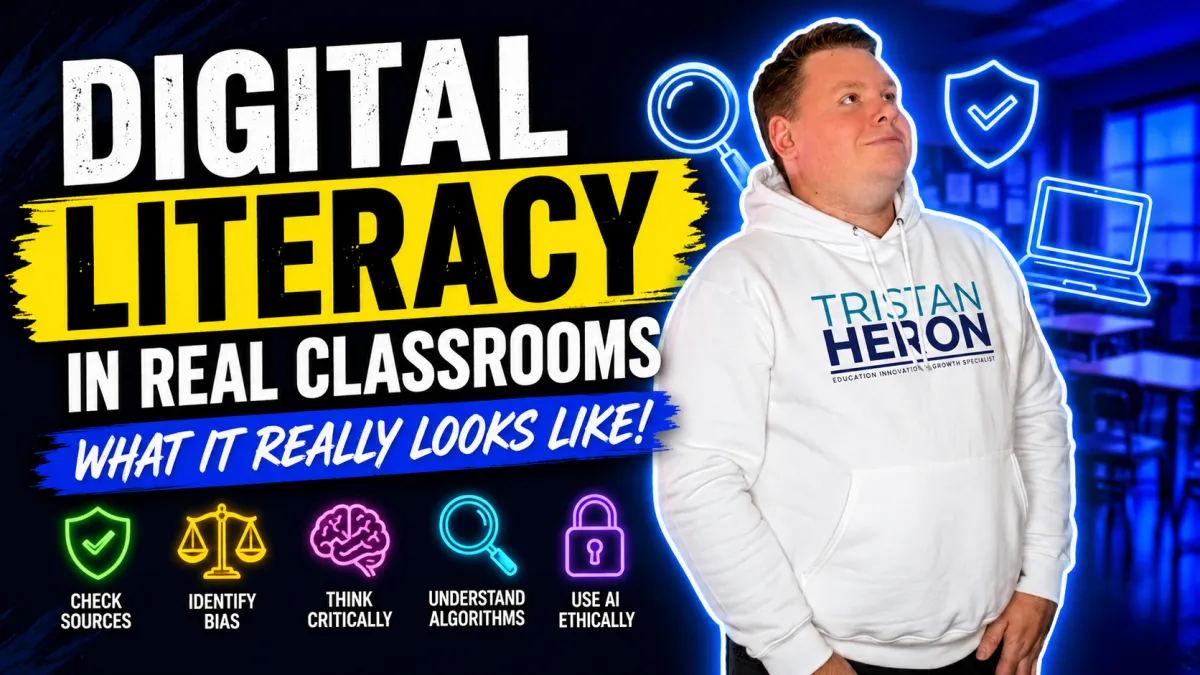
What Digital Literacy Really Looks Like in Real Classrooms
When people hear the term digital literacy, they often imagine coding lessons, expensive devices or specialist technology classes.
But the truth is far simpler — and far more important.
Digital literacy is not about having the latest gadgets or using the fanciest apps. It is about helping students think critically, act responsibly and make informed choices in a digital world.
At Evolve EdTech, we believe digital literacy should not sit in a separate box on the timetable. It should be embedded into everyday learning through practical, purposeful classroom experiences.
Because students do not need digital literacy someday.
They need it now.
Digital Literacy Is Bigger Than Technology Skills
Knowing how to click buttons, open apps or type quickly is useful.
But true digital literacy goes much deeper.
It includes the ability to:
Evaluate information
Identify bias
Use technology ethically
Understand online influence
Protect privacy
Communicate responsibly
Think critically before sharing content
These are life skills, not just tech skills.
What It Looks Like in Real Classrooms
Digital literacy does not need a special lab or expensive equipment. It can be woven into normal teaching practice in simple and powerful ways.
1. Teaching Students to Verify Sources
Students are surrounded by information, but not all of it is accurate.
Real digital literacy means teaching students to ask:
Who created this?
Why was it made?
Is the information current?
Can it be verified elsewhere?
Is the source trustworthy?
Comparing two websites on the same topic can become a rich learning activity in any subject area.
2. Helping Students Recognise Bias
Every source has a perspective.
Students should learn to notice language choices, omissions and how information is framed.
This might involve:
Comparing headlines from different outlets
Identifying persuasive language
Discussing whose voices are missing
Exploring how images shape opinion
These skills build sharper thinkers.
3. Understanding Algorithms and Feeds
Many students assume what appears online is random.
It is not.
Search engines, streaming platforms and social media feeds are designed systems that prioritise certain content.
Students should explore questions like:
Why am I seeing this video?
Why did this story appear first?
What data may be influencing recommendations?
How can feeds shape beliefs?
When students understand algorithms, they become less easily manipulated and more informed users.
4. Modelling Ethical AI Use
Artificial intelligence is now part of modern learning and work.
Students need to see adults using AI tools responsibly.
That means modelling how to:
Check outputs for accuracy
Question bias or errors
Protect private information
Use AI as a support tool, not a shortcut
Credit ideas appropriately
Technology literacy must include integrity.
5. Asking Better Questions
Sometimes the most powerful classroom strategy costs nothing.
Ask:
Why do you trust that source?
That one question encourages:
Reasoning
Reflection
Evidence-based thinking
Justification of choices
Deeper discussion
And those habits matter far beyond school.
Why This Matters in 2026
Today’s students are growing up in a world shaped by constant content, AI-generated material and endless streams of information.
If we only teach students how to use devices, we are missing the bigger picture.
They need to know how to navigate digital spaces wisely.
Final Thoughts
At Evolve EdTech, we believe digital literacy does not need to be complicated.
It needs to be intentional.
When we teach students to question information, justify their choices and think deeply about what they consume online, we are doing far more than teaching technology.
We are building capable, confident and future-ready digital citizens.