
Visionary EdTech Leaders Shaping Education 2026: The Email I Nearly Ignored
A few months ago, an email landed in my inbox asking if I'd like to be featured in a magazine. My first thought wasn't "how exciting." It was "nice try."
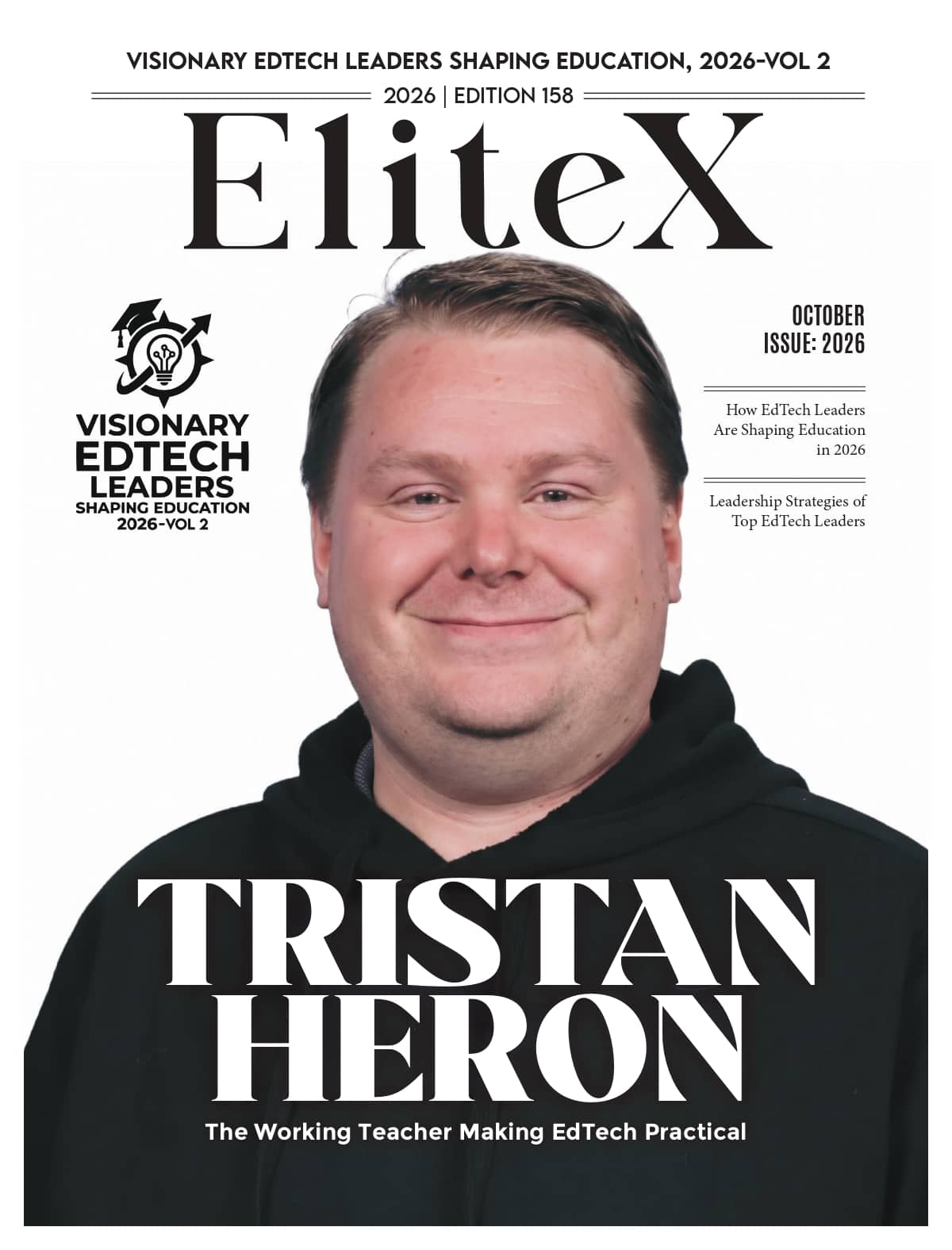
I'm glad I didn't hit delete. Because I'm now on the cover of Elite X's Visionary EdTech Leaders Shaping Education 2026, Volume 2. Yes, really. A full-time classroom teacher, on a magazine cover.
I've kept this one pretty quiet. Only a couple of people knew. So here's the full story, what the article covers, and why I think more teachers need to take the chance when an opportunity like this turns up.
What is the Visionary EdTech Leaders Shaping Education 2026 edition?
Elite X is an online magazine that publishes themed editions profiling leaders in different industries. Its Visionary EdTech Leaders series focuses on people shaping educational technology.
The 2026 edition, Volume 2, features a group of people working across EdTech. And somehow, I'm the one on the front.
I'll be self-deprecating for a second and say the other people featured are clearly just not as cool as me. (Kidding. Mostly.)
If you look closely at the cover photo, you'll spot my old Evolve EdTech jumper. That photo is from before we moved into the Tristan Heron phase of the business. It felt right, though. That jumper has been through a lot of the journey the article talks about.
You can read the full edition here: Visionary EdTech Leaders Shaping Education 2026.
Please be nice to me if you do.
Why did I almost ignore the invitation?
Because it sounded like a scam.
We all get these emails. "Congratulations, you've been selected." "We'd love to feature you." Most of the time, they're exactly what they look like: someone trawling the internet for keywords and hoping you'll bite.
So I fobbed it off to start with. I'd done the same thing with my Corporate Vision awards. When the first one came through, I had the same reaction: is this actually real?
Healthy scepticism is a good thing. Letting it make every decision for you isn't.
Eventually, I took a chance. I replied, sent through the information the editorial team asked for, and let it play out.
I'll also own the fact that this has been a couple of months in the works, mostly because I didn't reply to the emails as quickly as I should have. Teacher inbox life. Some of you will know exactly what I mean.
What does the magazine article cover?
The article was put together by the Elite X editorial team using information I supplied. It's a long read, so I won't walk you through it line by line. Go and have a look yourself.
Here's what it covers:
My EdTech journey and how I started supporting other educators with educational technology
Why educational technology matters in the classroom, and what it should and shouldn't be doing for teachers
The move from Evolve EdTech to Tristan Heron, and what I'm hoping to achieve by supporting educators under one unified brand
The Corporate Vision awards, including Leading Teacher EdTech Training Initiative 2025 and Leading Teacher-Led EdTech Innovation Provider 2026 (Australia). You can see these and my other credentials on the Our Achievements page.
The launch of the Empowered Educator Podcast, now available on the major podcast platforms and YouTube
The Empowered Educator Hub, our membership academy for educators
If you've been curious about the Hub, the article is a decent overview of why it exists. Short version: it's a place to build your confidence with EdTech in the classroom, and to share what you know with other educators. You can have a look at the Empowered Educator Hub here whenever you're ready.
Why does this matter for classroom teachers?
Here's the bit I actually care about.
I'm still in the classroom. I still teach Year 11 and 12 English Studies. I still mark essays at night and still have Year 9 classes that leave me exhausted.
A magazine putting a working classroom teacher on its EdTech cover says something. It says the people doing the work in real schools have something worth listening to.
You are not competing with people who left the classroom years ago. The practical, tested, "here's what actually worked with my Year 8s on a Thursday afternoon" knowledge you have is valuable. Often more valuable than the polished keynote version.
So much of what makes teachers good at EdTech never gets shared beyond one staffroom. The shortcut you worked out in Google Classroom. The Canva template that saved your faculty hours. The way you introduced AI to a nervous class without making it a big deal.
That knowledge deserves a wider audience.
Should teachers take the chance when an opportunity comes up?
Yes. With your eyes open.
My whole story with this magazine comes down to one decision: I took a chance on me. Not a reckless one. Just a "let's see where this goes" one.
If a recognition opportunity, a speaking invite or a request to share your work lands in your inbox, here's a sensible way to approach it:
Look the organisation up. Search their name, find their website and see what they've published before.
Check who else has been featured. Real publications have real people in them, with names you can look up.
Read the fine print. Know exactly what you're agreeing to, including any costs, before you say yes.
Ask someone you trust. A colleague, a mentor, someone in your professional network. A second opinion helps.
Then decide. If it checks out and it feels right, back yourself.
Scepticism protects you. It shouldn't stop you.
The worst outcome of taking a well-checked chance is usually a polite "no thanks" further down the track. The best outcome might be something you never expected.
How can teachers share their expertise with other educators?
This is the thread that runs through everything I do, and it's a big part of what the article explores.
I want to help educators use EdTech confidently in their classrooms. But I also want to help them see that what they know is worth sharing.
You don't need a magazine cover to do that. You can start small:
Share one thing at your next staff meeting. A tool, a template, a five-minute workflow.
Offer to help one colleague. The one who keeps asking how you did that thing in Canva.
Post about what's working. A short social post about a lesson that went well reaches more teachers than you'd think.
Join a community of educators who are doing the same thing and want to learn from each other.
That last one is exactly why the Hub exists. Confidence builds faster when you're not figuring it all out on your own.