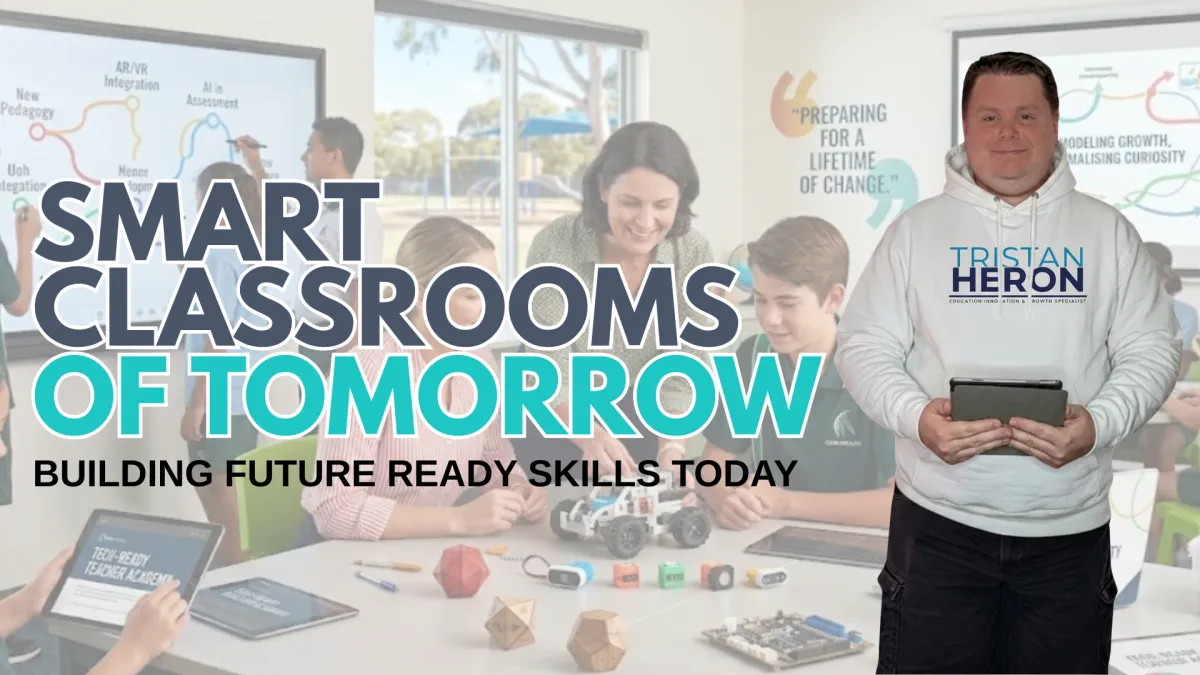
Smart Classrooms of Tomorrow: How to Build Future-Ready Skills in Today’s Students
Smart Classrooms of Tomorrow: How to Build Future-Ready Skills in Today’s Students
The world our students are entering is changing faster than ever before.
Technology is evolving daily. Artificial intelligence is reshaping industries. New careers are emerging while others disappear. Information is available instantly, yet not all of it is accurate, useful or ethical.
As educators, this creates both a challenge and an opportunity.
If we want students to thrive in the future, we must move beyond simply delivering content knowledge and start intentionally developing the skills they will need to succeed in a rapidly changing world.
That is exactly why I recently explored this topic during Episode 22 of Innovative EdTech — Smart Classrooms of Tomorrow: Building Future-Ready Skills Today.
Let’s unpack what that means for modern classrooms.
Why Future-Ready Skills Matter
The future our students are preparing for will look very different from the one many of us entered after school.
Today’s students need to be ready for:
AI-powered workplaces
Rapid technological change
New and emerging industries
Constant access to information
Global collaboration
Flexible career pathways
Success in this future will rely on much more than memorising facts.
Students will need to:
Think critically
Solve problems
Adapt quickly
Communicate effectively
Use technology responsibly
Learn continuously
These are the capabilities that turn young people into confident, informed and successful future citizens.
Introducing the Future-Ready Skills Framework
At Evolve EdTech, I introduced a simple framework built around three key skill clusters that schools can embed into everyday teaching.
These three clusters help educators prepare students for life beyond the classroom.
1. Thinking Skills
How students analyse, question, solve problems and generate ideas.
2. Digital Skills
How students navigate and use technology effectively, responsibly and intelligently.
3. Human Skills
How students communicate, collaborate and adapt in both digital and real-world environments.
Cluster 1: Thinking Skills
Critical Thinking
Students need the ability to evaluate information, challenge assumptions and make thoughtful decisions.
This is especially important in a world full of misinformation, biased content and endless online opinions.
Practical Classroom Ideas:
Inquiry-based learning tasks
Structured debates
Compare multiple sources on one topic
Analyse media or AI outputs for bias
Use visible thinking routines
When students learn how to think, not just what to think, they become far more powerful learners.
Creativity and Innovation
Future careers will reward those who can create, imagine and improve systems.
That means schools should provide more opportunities for students to generate original ideas and think beyond traditional approaches.
Practical Classroom Ideas:
Offer multimodal assessments (podcasts, videos, comics, infographics)
Use tools like Canva, Book Creator or Adobe Express
Introduce design-thinking challenges
Encourage experimentation and revision
Creativity is not an “extra”. It is a future workforce skill.
Cluster 2: Digital Skills
AI Literacy
Artificial intelligence is already embedded into daily life and workplaces.
Students need to know how to use it ethically, critically and effectively.
Practical Classroom Ideas:
Demonstrate how AI can support brainstorming
Teach prompt writing and refinement
Analyse AI outputs for strengths and flaws
Discuss bias, privacy and responsible use
AI should be viewed as a tool — not a replacement for human thinking.
Digital Literacy
Many students can use devices, but that does not always mean they are digitally literate.
They still need guidance in how to find, evaluate, create and communicate information effectively online.
Practical Classroom Ideas:
Teach students how to evaluate websites
Identify reliable sources
Use collaborative Google Docs or Slides
Create multimedia projects
Develop shared online learning spaces
Digital confidence is now a life skill.
Cluster 3: Human Skills
Digital Communication
Students increasingly communicate through digital environments.
That means they need to know how to express themselves clearly, respectfully and professionally.
Practical Classroom Ideas:
Record video presentations
Create digital reflections
Build blogs or portfolios
Participate in discussion forums
Learn how to structure professional emails
These small skills often become big differentiators later in life.
Adaptability and Lifelong Learning
Technology and industries will continue to evolve.
Students who can learn new skills, respond to change and remain open-minded will be far better equipped for the future.
Practical Classroom Ideas:
Reflection journals
Portfolio growth tracking
Revise work based on feedback
Introduce new tools gradually
Model growth mindset when technology fails
Because let’s be honest… sometimes it absolutely will.
And that’s part of learning too.
Key Takeaways for Educators
Future-ready classrooms are built through:
Curiosity
Encouraging students to explore, ask questions and investigate.
Collaboration
Helping students work effectively with others.
Creativity
Making space for original thinking and innovation.
Thoughtful Use of Technology
Choosing tools with purpose, not just novelty.
Every lesson matters.
Every opportunity matters.
Every classroom moment can shape a student’s future.
Final Thoughts
You are already helping shape tomorrow.
Every conversation, challenge, activity and encouragement you provide is building the future skills young people need.
Sometimes teachers underestimate the long-term impact of small daily actions.
But those moments matter more than you think.
Keep going.
Want to Keep Growing Your Future-Ready Teaching Skills?
Join the Tech-Ready Teacher Academy for just $49 AUD per month and gain access to:
Monthly live masterclasses
Exclusive professional learning
Classroom-ready digital templates
Practical edtech strategies
Ad-free workshop recordings
Supportive educator community
Learn more today at www.evolveedtech.com/academy
The future is coming. Let’s help students be ready for it.